
Old vs. New: Indian Document Rules in 2026
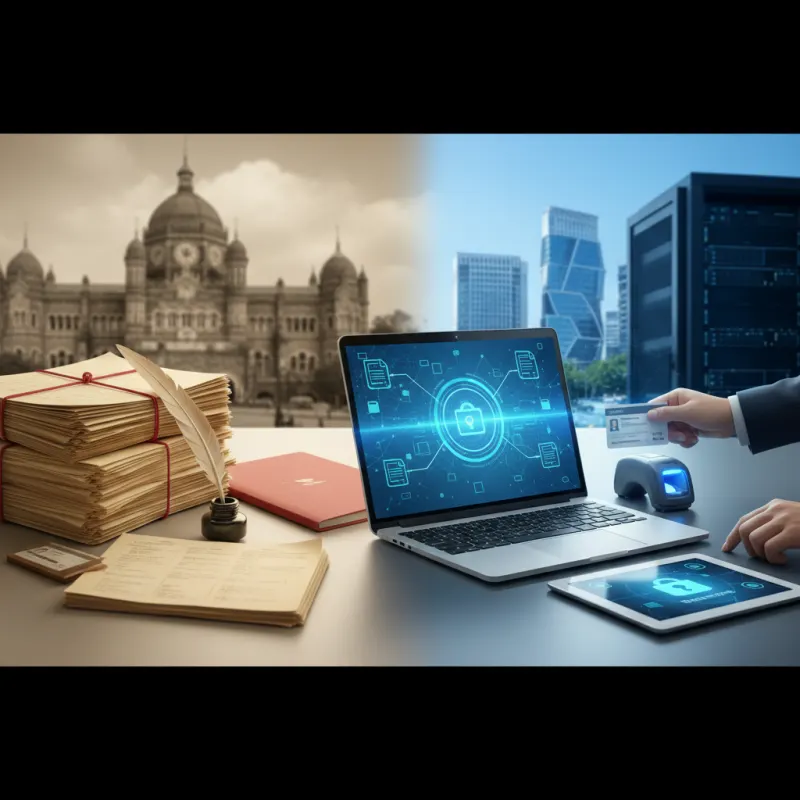
Old vs. New: A 2026 Guide to Indian Document Processes
As of September 2026, the landscape of Indian government documentation has transformed. The processes you might remember from a few years ago are likely outdated. The government's push for a 'Digital India' has replaced paper-heavy, in-person tasks with streamlined online systems. Understanding these shifts is crucial for any successful application. This guide compares the old and new methods for key documents like Aadhaar, PAN, Passport, and Driving Licence to help you navigate the current procedures.
Aadhaar Card: From Long Queues to Online Clicks
The Old Way: Heavy Reliance on Enrolment Centres
Previously, almost every Aadhaar-related task required a physical visit to an Aadhaar Seva Kendra (ASK) or enrolment centre. Whether you needed to update your mobile number, correct a spelling mistake in your address, or change your photo, it meant finding a centre, waiting in long queues, and submitting physical forms. Online functionalities were minimal, offering little more than checking status or downloading an e-Aadhaar.
The New Rules in 2026
Today, the myAadhaar portal is the central hub for most services. UIDAI has empowered residents to perform many updates from home. A significant change is the free online document update service, aimed at ensuring your demographic details are backed by current Proof of Identity (PoI) and Proof of Address (PoA). While deadlines for this free service can change, it's a key initiative. For major changes like date of birth or name updates beyond the prescribed limit, a more defined exception process is now in place, although it still requires a visit to an ASK. Biometric updates (for children turning 5/15 and for all adults every 10 years) remain an in-person activity.
PAN Card: The Evolution to Instant e-PAN
The Old Way: Physical Forms and Long Waits
The traditional PAN application involved filling out the physical Form 49A, pasting a photograph, attaching photocopies of your ID and address proofs, and submitting it at a designated centre. The process was slow, and applicants often waited for several weeks for the physical PAN card to be delivered by post. Any mistake in the form could lead to rejection and restarting the entire process.
The New PAN Process in 2026
In 2026, applying for a PAN is faster than ever. The flagship service is the 'Instant e-PAN' through Aadhaar e-KYC, which provides a digitally signed PAN in PDF format in near real-time. For many, a physical card is now optional. The system pulls your name, date of birth, address, and photo directly from your Aadhaar data, drastically reducing errors and processing time. Furthermore, the mandatory linking of PAN with Aadhaar is strictly enforced, with inactive PANs blocking financial transactions. Failure to link results in your PAN becoming inoperative, attracting penalties.
Passport Services: Expanding Access Beyond Major Cities
The Old Way: Limited Passport Seva Kendras (PSKs)
In the past, passport applicants often had to travel to a major city to find a Passport Seva Kendra (PSK). Appointment slots were scarce and booked out weeks in advance. The entire process, from document submission to the interview, was confined to these few, often overcrowded, centres, making it a difficult task for those in smaller towns and rural areas.
The New Passport Application Flow in 2026
The government has significantly expanded its footprint by establishing Post Office Passport Seva Kendras (POPSKs). This brings passport services closer to people's homes. The online application process is now integrated with DigiLocker, allowing you to fetch and submit documents like your Aadhaar and PAN digitally, reducing the need for physical copies. The rollout of ePassports with embedded electronic chips continues, promising faster and more secure immigration checks. The process for obtaining a Police Clearance Certificate (PCC) has also been streamlined and can often be applied for through the same portal.
Driving Licence: From Manual Tests to Automated Tracks
The Old Way: Subjective RTO Processes
Getting a driving licence traditionally involved multiple visits to the local Regional Transport Office (RTO). The process was infamous for its bureaucracy, long lines, and paper-based records. The driving test itself was conducted by an RTO inspector, and the evaluation could sometimes be subjective. Renewals and address changes also required a mandatory physical visit.
The New Driving Licence System in 2026
The SARATHI portal now offers numerous 'faceless' services. You can apply for a learner's licence, renew your DL, or update your address entirely online in many states, provided your Aadhaar is linked to your mobile. A major shift is the introduction of Automated Driving Test Tracks (ADTTs) in various cities. These tracks use sensors and cameras to conduct the test without human intervention, leading to a fair and transparent evaluation. The result is a more standardized and efficient system for all applicants.
Why Choose Mahi IT Services?
Navigating these new digital government portals can be challenging. A small data mismatch or an incorrect document upload can lead to delays and rejections. At Mahi IT Services, we specialize in guiding residents of Mumbai, Thane, Navi Mumbai, and surrounding areas like Govandi and Chembur through these updated processes. Whether you need help with a new PAN card, Aadhaar updates (including limit-crossed cases), passport assistance, or driving licence services, our team ensures your application is accurate and compliant with the latest 2026 rules. Let us handle the complexities so you can get your documents with ease.
Related services from Mahi IT Services
We handle the paperwork end to end — see pricing and required documents.
Need help with this?
Message us on WhatsApp — we will tell you exactly which documents you need and how long it takes.